

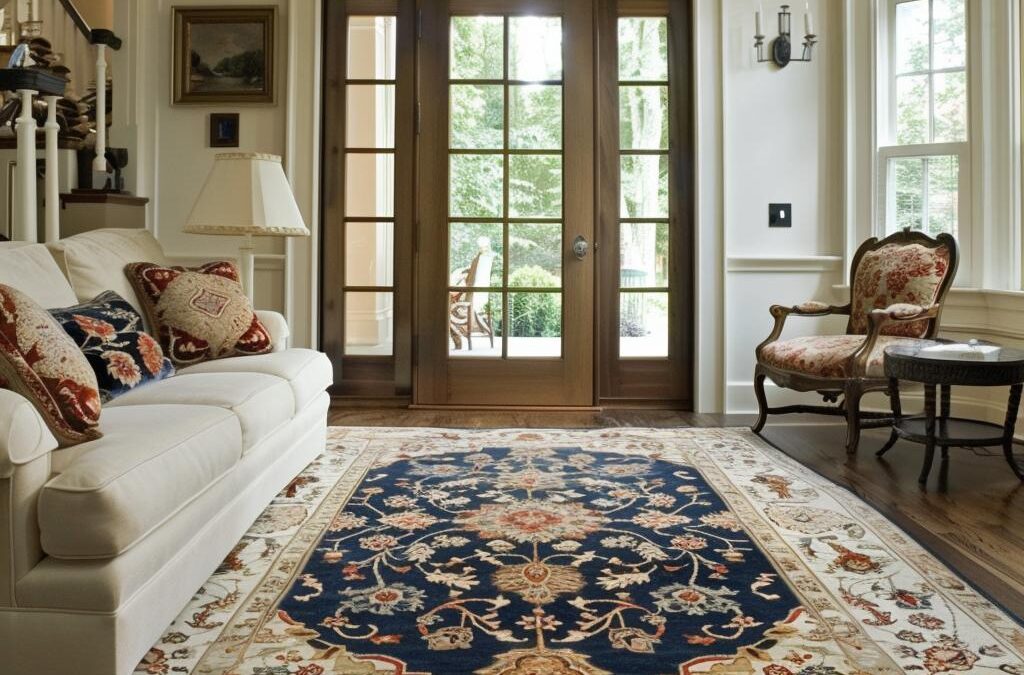
Area rugs are critical design elements, serving as vibrant focal points that introduce warmth, texture, and character to homes across Canberra, ACT. Yet, by their very nature, these beautiful and often expensive textiles reside in high-traffic zones, making them magnets for dirt, spills, and unseen contaminants. They inevitably become unintended canvases for the daily realities of life—from pet accidents and liquid spills to abrasive street grit and fine dust.
The challenge lies in the complexity of these textiles. Unlike hard flooring or wall-to-wall carpeting, area rugs are intricate structures, often featuring delicate natural fibres, unstable dyes, and complex construction methods. When stains and soils penetrate these structures, they pose a significant problem that basic area rug cleaning methods cannot solve, and often exacerbate.
This content explores the specific problems inherent in area rug contamination, the risks of inadequate cleaning, and the definitive professional solutions required to preserve these valuable home assets.
When Rugs Become Hidden Reservoirs of Contaminants
A rug’s appearance can be deceiving. Even if surface dirt is vacuumed, the core problems lie deep within the fibre structure and the rug’s backing, leading to four distinct, compounding issues:
1. Fibre Deterioration from Deep-Set Soil
The number one enemy of any area rug is dry, insoluble grit. This sand-like soil is tracked in daily, falls through the rug’s pile, and accumulates deep in the foundation (the backing). This accumulation acts like sandpaper. Every time the rug is walked on, the grit rubs against the base of the fibres, causing microscopic nicks and tears. Over time, this leads to:
Premature Wear: Fibres look flat, dull, and brittle.
Loss of Sheen: The rug loses its original luster and vibrant look.
Irreversible Damage: The continuous abrasion reduces the rug’s lifespan dramatically.
Standard household vacuums lack the suction and mechanical action to fully extract this deep-set, abrasive matter.
2. Complex Stains and the Risk of Setting
Spills are a frequent occurrence, but their composition makes them difficult to remove safely. Stains are chemical events, and applying the wrong solution can permanently fix the colour or damage the fibres:
Protein Stains (Pet Urine, Blood): These require specific enzymatic breakdown. If treated with heat (like steam from a standard cleaner), the protein coagulates, permanently bonding the stain to the fibre and making it near-impossible to remove later.
Tannin/Dye Stains (Red Wine, Coffee): These can bleed or spread easily. Using aggressive bleach or chemicals on unstable, natural dyes (common in Oriental rugs) leads to immediate and irreversible colour bleeding, destroying the rug’s pattern and value.
3. Odour and Bio-Hazard Challenges
Rugs, especially those exposed to pet accidents, can become reservoirs for biological contamination and persistent odours. Pet urine, for example, is composed of highly corrosive uric acid crystals.
Lingering Odours: The uric acid crystals do not dissolve easily in water. They crystallize within the rug’s foundation and release pungent gases (VOCs), which cause the strong, unpleasant odour to return, especially in humid conditions.
Bacteria and Mould: Inadequate drying after a spill or improper cleaning can leave moisture trapped in the thick backing. This creates a perfect environment for mould, mildew, and harmful bacteria to thrive, leading to health issues and structural degradation of the rug.
4. Fibre and Construction Vulnerabilities
Area rugs are made from a wide array of materials—delicate silk, porous wool, heat-sensitive synthetics, and natural jute. Each demands a specific approach:
Wool/Natural Fibres: Highly sensitive to alkaline cleaning agents and hot water. Incorrect $\text{pH}$ levels cause fibre damage, stiffness, and shrinkage.
Dye Instability: Many dyes are not fully colourfast. Cleaning without prior testing often results in severe dye migration.
Hand-Woven Structures: Require gentle handling. Aggressive scrubbing or rubbing can easily fray or distort the weave, causing structural damage.
A Meticulous, Multi-Stage Professional Restoration Process
Effective area rug restoration is a specialized field that blends chemistry, textile knowledge, and professional equipment. The solution lies in a controlled, multi-stage process that prioritizes fibre safety and complete contaminant removal, extending the rug’s life and restoring its visual appeal.
Stage 1: Pre-Assessment and Safety Testing
Before any moisture is applied, a thorough inspection is essential. This involves:
Fibre Identification: Determining the exact material (wool, silk, synthetic) to select the correct $\text{pH}$ cleaning solution.
Structural Review: Checking for existing damage, tears, or high-wear areas that require gentle handling.
Colourfastness Test: Applying a test solution to an inconspicuous area to guarantee the dyes are stable and will not bleed during cleaning.
Stage 2: Essential Dry Soil Removal (Professional Dusting)
This critical step addresses the number one cause of damage. Using specialized mechanical equipment designed to safely vibrate and ‘dust’ the rug, technicians meticulously loosen and remove the embedded dry soil and abrasive grit that regular vacuuming misses. This prevents the dirt from turning into destructive mud during the washing phase.
Stage 3: Spot Treatment and Pre-Conditioning
Targeted chemical treatments are applied based on the specific stain. Enzymes are used for bio-matter (pet urine), while specialized oxidizing or reducing agents target dyes (wine, coffee). A general, $\text{pH}$-balanced pre-conditioning agent is then applied across the entire surface to safely emulsify (break down) oily soils and traffic grime, preparing them for extraction.
Stage 4: Deep Cleaning and Contaminant Extraction
Depending on the rug’s vulnerability, cleaning is conducted using controlled hot water extraction or a full wash process. Professional systems use precisely controlled heat and powerful vacuum suction to:
Flush and Rinse: Thoroughly rinse out the loosened soil, pre-conditioners, and spot treatments.
Low-Moisture Principle: Ensure minimum moisture is left behind, preventing structural damage and inhibiting mould/mildew growth.
Total Neutralization: The cleaning solutions are completely removed, preventing sticky, dirt-attracting residues.
For severe pet contamination, this stage involves deep flushing and soaking to dissolve and extract every layer of contamination, including the backing.
Stage 5: Post-Grooming and Controlled Drying
After cleaning, the rug pile is carefully groomed to reset the fibres in their natural direction, restoring softness and texture. The most crucial part is drying. Rugs are often placed in climate-controlled environments with high airflow to ensure they dry thoroughly and rapidly. This prevents the re-emergence of odours and the onset of microbial growth.
Stage 6: Final Inspection and Protection
The rug undergoes a final, stringent inspection to ensure all stains and odours have been removed and the colour integrity remains intact. An optional, professional-grade fibre protector can be applied to create an invisible shield around the fibres, making the rug significantly more resistant to future spills and simplifying maintenance.
The Health and Lifespan Benefits
A professionally cleaned rug delivers advantages that extend far beyond aesthetics:
Extended Lifespan: Removing the abrasive dry soil significantly reduces fibre wear, preserving the rug’s structure and protecting your investment for decades.
Superior Indoor Air Quality: Deep extraction removes high concentrations of allergens, including dust mites, pet dander, and pollen, providing measurable relief for allergy and asthma sufferers.
Elimination of Biohazards: The complete removal of bacteria, mould spores, and urine crystals ensures the rug is hygienic and safe for children and pets.
When the stakes are high—involving valuable, delicate, or heavily contaminated area rugs—relying on a general cleaner is simply not an option. The precision required for fibre identification, dye stability testing, and complete deep-set soil removal necessitates the expertise of dedicated specialists.
For over 20 years, the specialists at Exceed Carpet Cleaning have been dedicated to solving these complex rug challenges, ensuring the beautiful textiles in Canberra homes are restored to their cleanest, healthiest, and most vibrant condition.